Table Of Content

With a design system spec in hand, you have the foundation in place for a thoughtful and consistent user experience across the digital touchpoints of your product. In order to realize these benefits, however, there’s more work to be done; the abstract must become concrete. Specifically, your product team must connect the abstracted design system specification to the concrete code that comprises the user interfaces across your product. Absent this connection, the ideals of your design system are likely to remain only ideals, isolated and of little help to the reality of the users of your product.
Architecture
This process serves as the blueprint for transforming abstract ideas into tangible and functional software systems. That’s why we split it into major high-level components and then those into a detailed design based on requirements. In this step, you sketch the main components of your system and how they are connected, don’t go into the details yet. Vertical scaling uses one huge machine that handles all your requests and improves response time and throughput.
Physical design
Contrary to general assumptions, the hardware design process is actually complex and intricate. So much so that there is a common saying among hardware engineers that "hardware is hard". This is because physical systems operate in the real world where the permutations that need to be taken into account are endless.
100 Days System Design for DevOps and Cloud Engineers - Medium
100 Days System Design for DevOps and Cloud Engineers.
Posted: Sun, 14 Jan 2024 08:00:00 GMT [source]
All open-source articles on Design Systems
Each component of the UCS family, including the B-Series, C-Series, HyperFlex, and X-Series, is designed with energy efficiency in mind, delivering performance while mitigating energy use. Energy efficiency is a major consideration, starting from the beginning of the planning and design phases of these technologies and products all the way through into each update. Before getting started on a design system, determine what are your goals for it. Are you trying to streamline the design process across multiple products and services? Will the design system serve as a centralized place for all branding assets and documentation for all teams? Once you have the answers to these questions, you’ll be ready to create a design system.
As you put a process into practice, inevitably you’ll hit speed bumps. Remember, system design is a continuous learning process, and it's essential to stay updated with the latest technologies and best practices. Keep experimenting, explore real-world examples, and never stop improving your system design skills.
Connecting the dots: from Systems Design Engineering as a foundation for changemakers that will shape our world ... - University of Waterloo
Connecting the dots: from Systems Design Engineering as a foundation for changemakers that will shape our world ....
Posted: Tue, 06 Feb 2024 08:00:00 GMT [source]
Introduction to System Design: A Comprehensive Guide

It is advised that you should dedicate 1–3 months to consistent study and practice. Aim at understanding various system architectures and engaging with increasingly intricate design challenges. It allows us to scale effectively with increases in traffic and stay highly available. Load balancing is executed by load balancers, which are devices that act as reverse proxies. They’re responsible for distributing network traffic across multiple servers using different algorithms.
If any machine fails, the requests are redirected to the other machines, and it scales well when your users increase. There are different methods you can use to satisfy your system’s requirements for scalability, reliability, security, performance, and consistency. Organizations that follow agile development practices may incorporate regular testing into the development process.
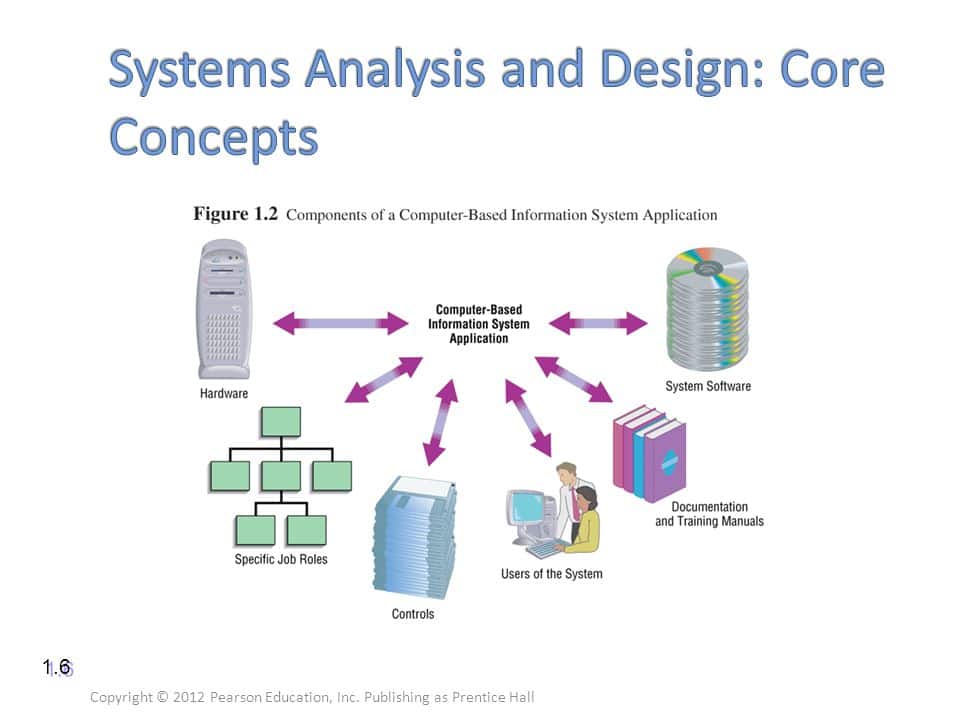
This proactive stance allows you to protect your devices and data against the latest threats, increasing the overall security profile of your device fleet. A custom operating system (OS) is one way to mitigate the constantly evolving risks and navigate an ever-changing threat landscape. A custom OS can provide unparalleled control over security features, updates, patches and enhanced device management, offering a robust first line of defense against cyber threats. A system is a set of things that work together as an interconnecting network to achieve a particular goal. The set of things can be hardware, software, employees and much more. Systems are everywhere around us such as computer systems which have both hardware and software to execute certain functions.
The board specification is a detailed process that provides information on all components of the central circuit board which controls all electrical and data transmission activities. This step is extremely important because a single miscalculation or false determination of component type of rating could render the entire product unworkable. Non-functional requirements restrict the system design through different qualities. They need to be analyzed, and if they are not fulfilled, they can harm the business plan or goals. Non-functional requirements include performance, security, reliability, scalability, maintainability, availability, etc.
In artistic or experimental websites, innovation takes priority over consistency. Here, the focus shifts to exploring new ideas rather than adhering to set standards. Through understanding of client business needs, delivering operational excellence and supporting their strategy through technology, enable business solutions to give the clients the competitive advantage.
Tools that run proprietary languages have missed the boat on Python, the lingua franca of AI, ML and Reinforcement Learning. Running such tools results in waterfall development processes that delay insight generation and result in show-stopping design issues late in the development process leading to cost overruns and delayed launches. The PVT phase is sometimes overlooked in system design because some engineers automatically assume that if EVT and DVT and great and optimal, PVT has no reason to fail.
The fabricators or mechanical engineers with either use 3D-printers or industrial milling machinery to build the physical components based on the CAD specifications. Companies will typically use 3D printers in the early stages of the development cycle because they are quick, easy to build, and very flexible. In later stages of development, they will typically use injection molded parts as they are more cost effective for mass production.


No comments:
Post a Comment